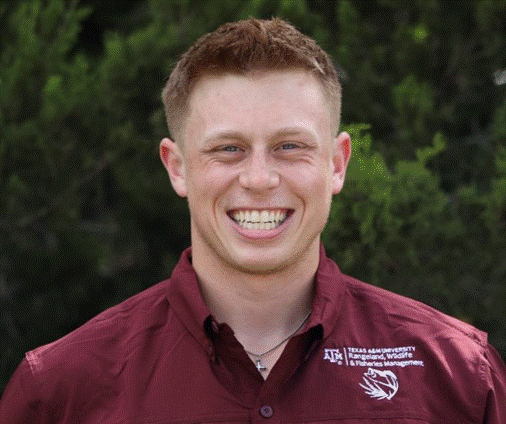
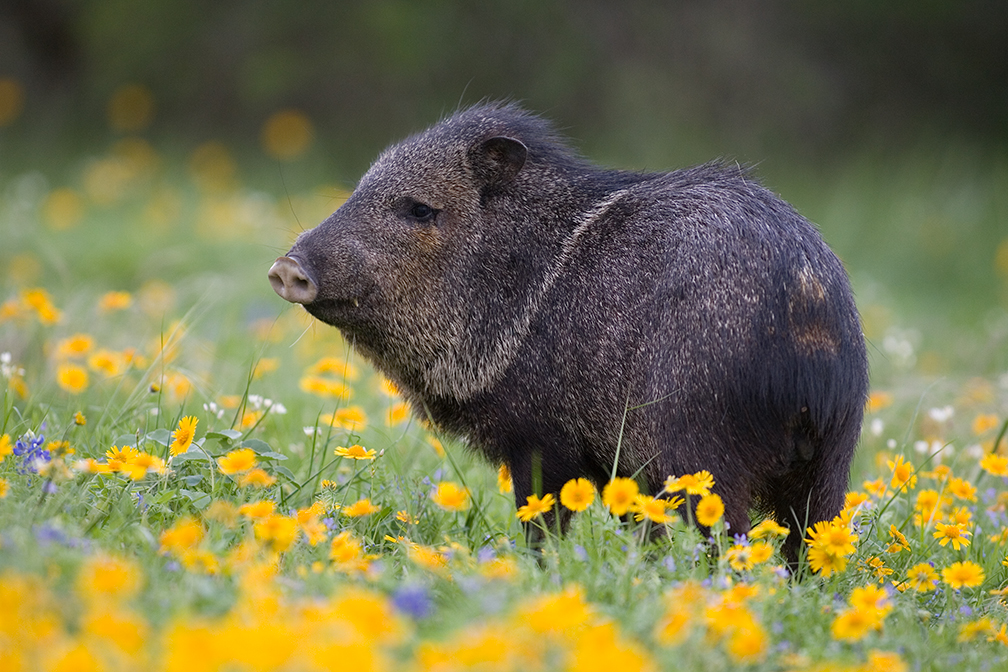
Howdy! My name is Samuel Campassi. I have a Bachelor of Science in Wildlife Management, and I am now a Master’s student in the Department of Rangeland, Wildlife, and Fisheries Management (RWFM) at Texas A&M University. For my graduate research, I will be investigating the effects of woody brush control on collard peccary (Pecari tajacu) space use and habitat selection. I am passionate about hunting, conservation, wildlife management, and pursuing a career in which I educate landowners and other diverse audiences about the importance of preserving our natural resources. I aspire to pursue a career as a wildlife and rangeland specialist where I can apply my research, field, and outreach experience to help landowners achieve stewardship goals, contribute to large-scale conservation initiatives, and promote sustainable natural resource management. Serving as a Welder Wildlife Fellow will provide the training, collaborative research opportunities, and hands-on experience necessary to enhance my expertise and further prepare me for a career dedicated to conservation and land stewardship.
Texas A&M University
Major Advisor: Stephen Webb, Ph.D.
Effects of Woody Brush Control on Collard Peccary Space Use and Habitat Selection
As a newly inducted 2026 Rob and Bessie Welder Wildlife Foundation Fellow, I am thrilled to have the opportunity to conduct meaningful research that supports the Foundation’s mission of advancing wildlife research, continued land stewardship, and conservation education. With my acceptance as a Welder Fellow being so recent, I have yet to begin the project outlined in the proposal included in my application (Effects of Woody Brush Control on Collard Peccary
Space Use and Habitat Selection), as I am in my first week of my first semester of graduate school at Texas A&M University. However, I will be spending ample time in the field this semester familiarizing myself with data collection and biological sampling processes that pertain to my research. Furthermore, I will be assisting other graduate students with javelina hunter-harvest data collections at the Chaparral Wildlife Management Area (CWMA), occurring on 1/30-2/1 and 2/6-2/8. This will be an incredible opportunity to gain experience in specimen handling techniques, biological sampling, measurements, and additional data collection methodologies. Additionally, I will also be participating in South Texas javelina camera and helicopter surveys, which will include surveys conducted on my study site, La Copita Ranch.
 welderwildlife.org