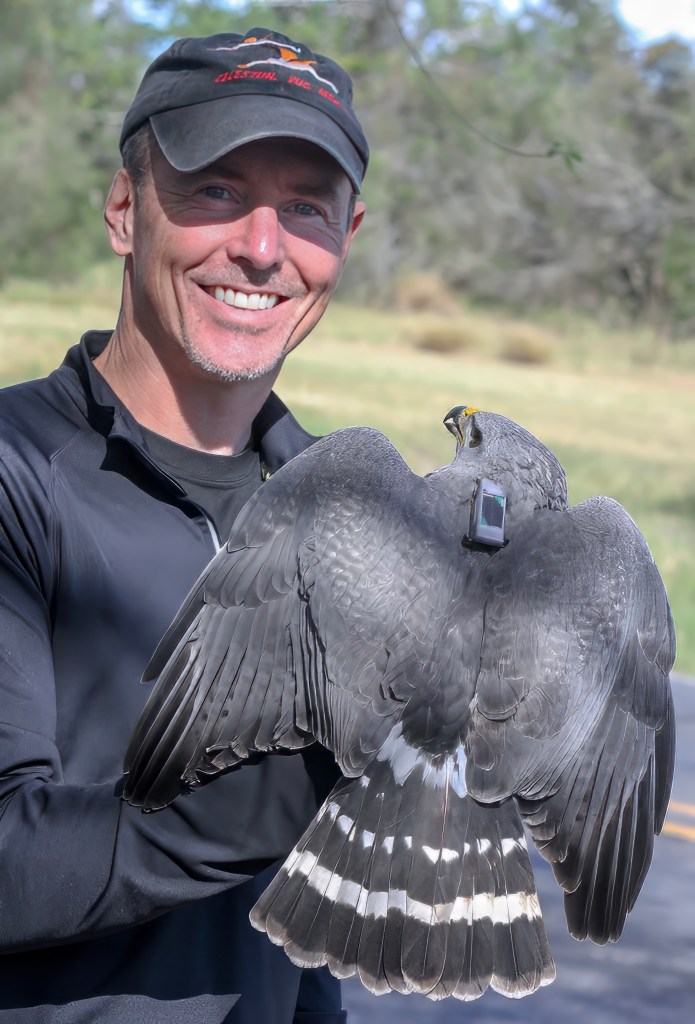
Mike Stewart is a Ph.D. student in avian ecology at Texas A&M University–Kingsville, where his research focuses on Gray Hawk habitat selection, range establishment, and population demographics in South Texas. His interest in birds began in 2002 and has since developed into more than two decades of birding and avian research experience, primarily in Texas and the eastern United States. After retiring from a 20-year career in the U.S. Army in 2019, Mike earned an M.S. in Biology from The University of Texas Rio Grande Valley, where he studied Gray Hawks in the Lower Rio Grande Valley. His research interests center on avian conservation, population ecology, and addressing knowledge gaps for species of conservation concern. Mike plans to pursue a career in avian research and conservation through applied research, federal service, or collaboration with conservation organizations. In his spare time, he enjoys birding and wildlife photography.
Texas A&M University-Kingsville
Major-Advisor: Ashley Tanner, Ph.D.
Habitat Use, Population Demographics, and Migration Ecology of Gray Hawks in the Southwestern United States
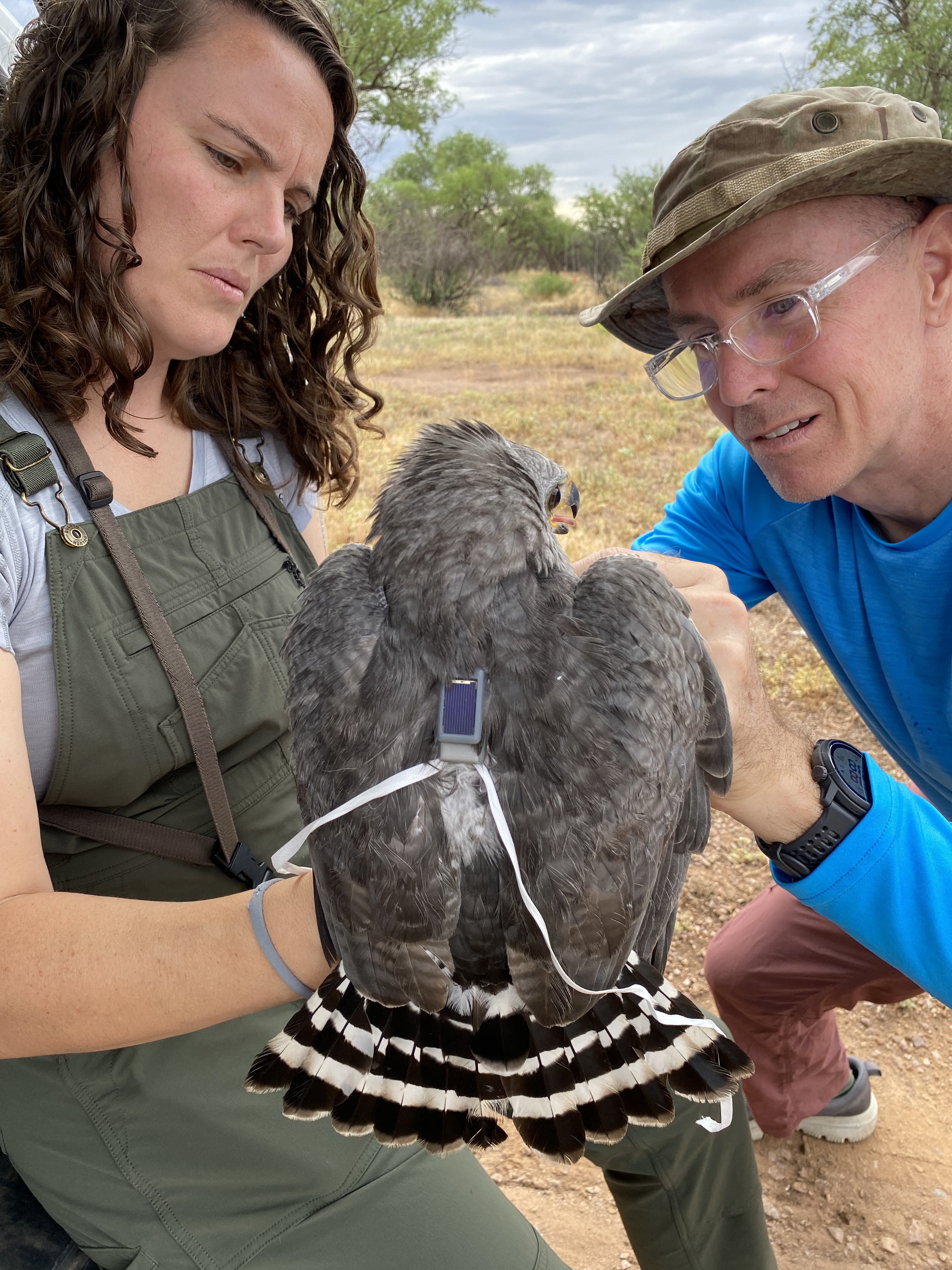
The Gray Hawk is a neotropical raptor with poorly studied populations in the southwestern United States, where habitat loss, urbanization, and other anthropogenic pressures pose increasing conservation challenges. In Texas, Gray Hawks occur year-round in South Texas and seasonally in portions of West Texas, with this study focusing on populations in the highly modified landscapes of the Lower Rio Grande Valley, where habitat use, population trends, and responses to urbanization remain poorly understood. My research integrates habitat selection analyses, species distribution modeling, population demography, and migration tracking to address these knowledge gaps. Specifically, I am identifying environmental features selected within home ranges, estimating survival, fecundity, and population growth rates, and locating additional suitable areas to inform conservation planning. I am also tracking migratory Gray Hawks in Arizona to identify migration routes, stopover sites, and wintering areas, allowing comparisons with resident Texas populations. By combining field surveys, telemetry, and remote sensing, this project aims to provide a comprehensive foundation for targeted Gray Hawk conservation and management across the species’ northern range limit.
 welderwildlife.org