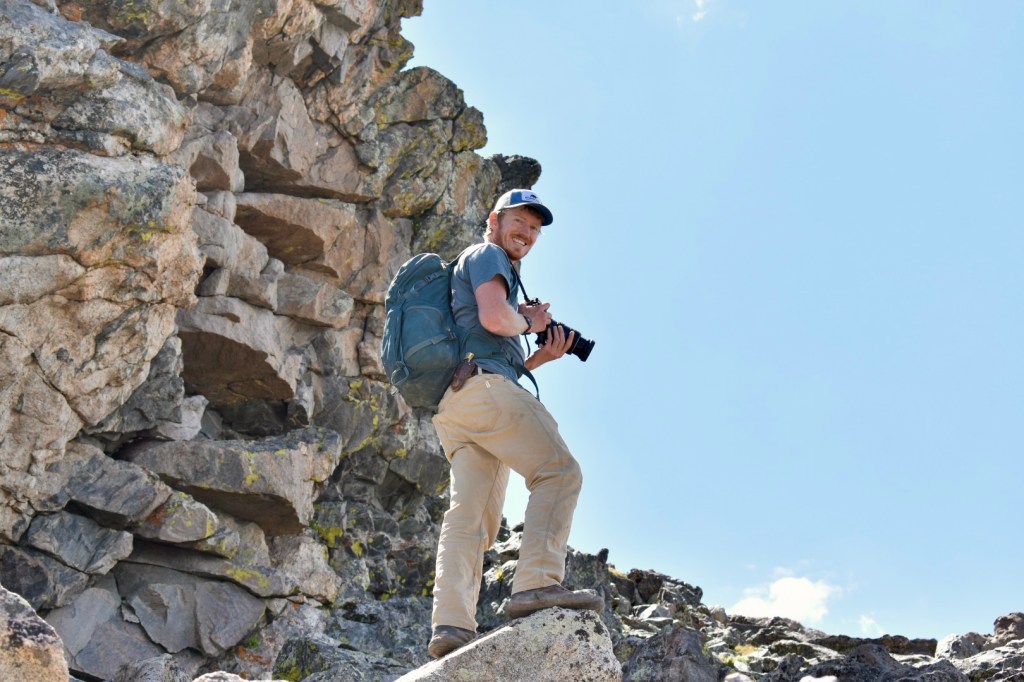
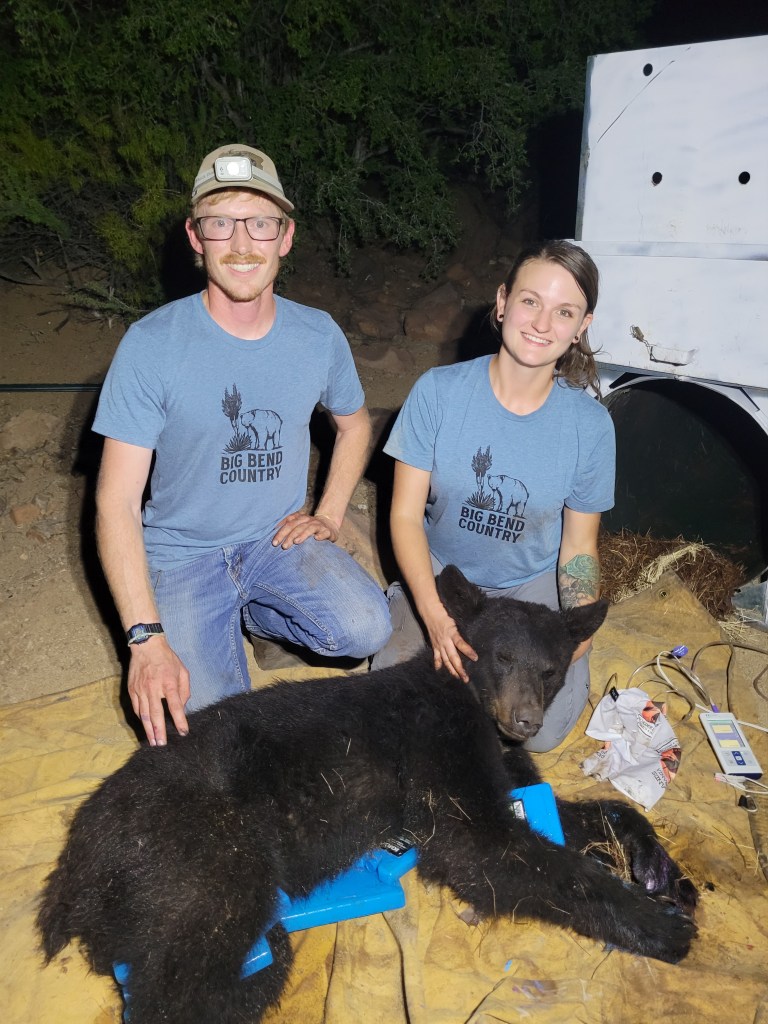
Matt grew up in Kingsville, Texas, where he developed a passion for wildlife and wild places. Because of his exposure to the outdoors in Texas and around the country, he knew from an early age that he wanted to work with wildlife. Pursuing his interests, he received a Bachelor’s degree from Texas A&M University-Kingsville, and later a Master’s at Sul Ross State University. An exciting job opportunity working with black-tailed deer and Roosevelt elk took him to the Pacific Northwest for 2 years, but he is now back in Texas working towards his Ph.D. at Texas Tech University, in collaboration with Borderlands Research Institute at Sul Ross State University, looking at modeling density of black bears in the mountains of far west Texas. After a 30+ year absence from Texas, black bears are naturally recolonizing the Trans-Pecos. Because of this absence, there are large data gaps that need to be filled to make informed management decisions. Matt plans to fill some of these data gaps by estimating how bear density in the Trans-Pecos varies across the landscape and through time.
Texas Tech University
Co-Advisor: Louis Harveson, Ph.D.
Co-Adivsor: Warren Conway, Ph.D.
UNDERSTANDING RECOLONIZATION EFFORTS OF BLACK BEARS IN THE BIG BEND REGION
Black bears once occupied a large portion of Texas but were extirpated by the 1950s due to unregulated hunting and large-scale carnivore control efforts. However, the population started to naturally recolonize in the 1980s from source populations in the high elevation mountains of northern Coahuila, Mexico. This new recolonizing bear population has started interacting with an also growing human population in the Trans-Pecos region, which has produced a growing number of human-bear interactions and highlights the need for updated population information. Knowing how many bears are in the population, and how they distribute themselves across the landscape, will be critically important to making informed management decisions during the recolonization process. I will use GPS locations from collared bears in the area within a simulation study to customize a sampling design appropriate for the region. Hair snares deployed under the identified sampling design will collect the data needed to fit a spatially explicit capture recapture model, and produce the first estimate of density for this population.
 welderwildlife.org