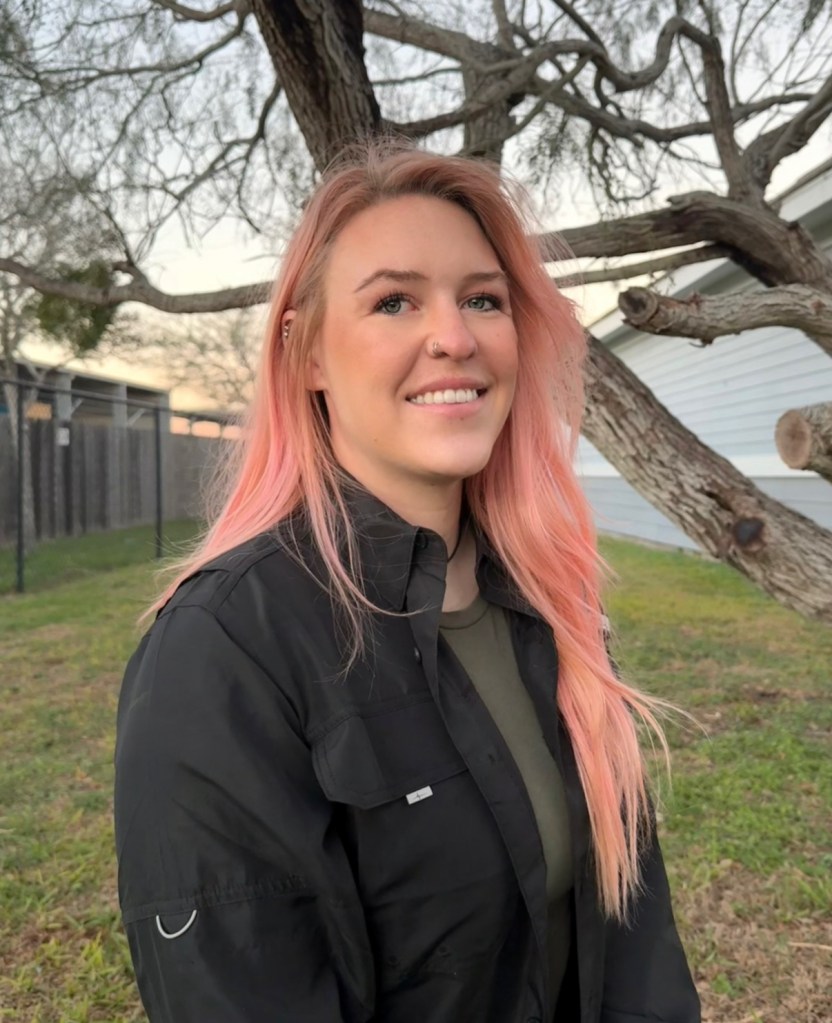
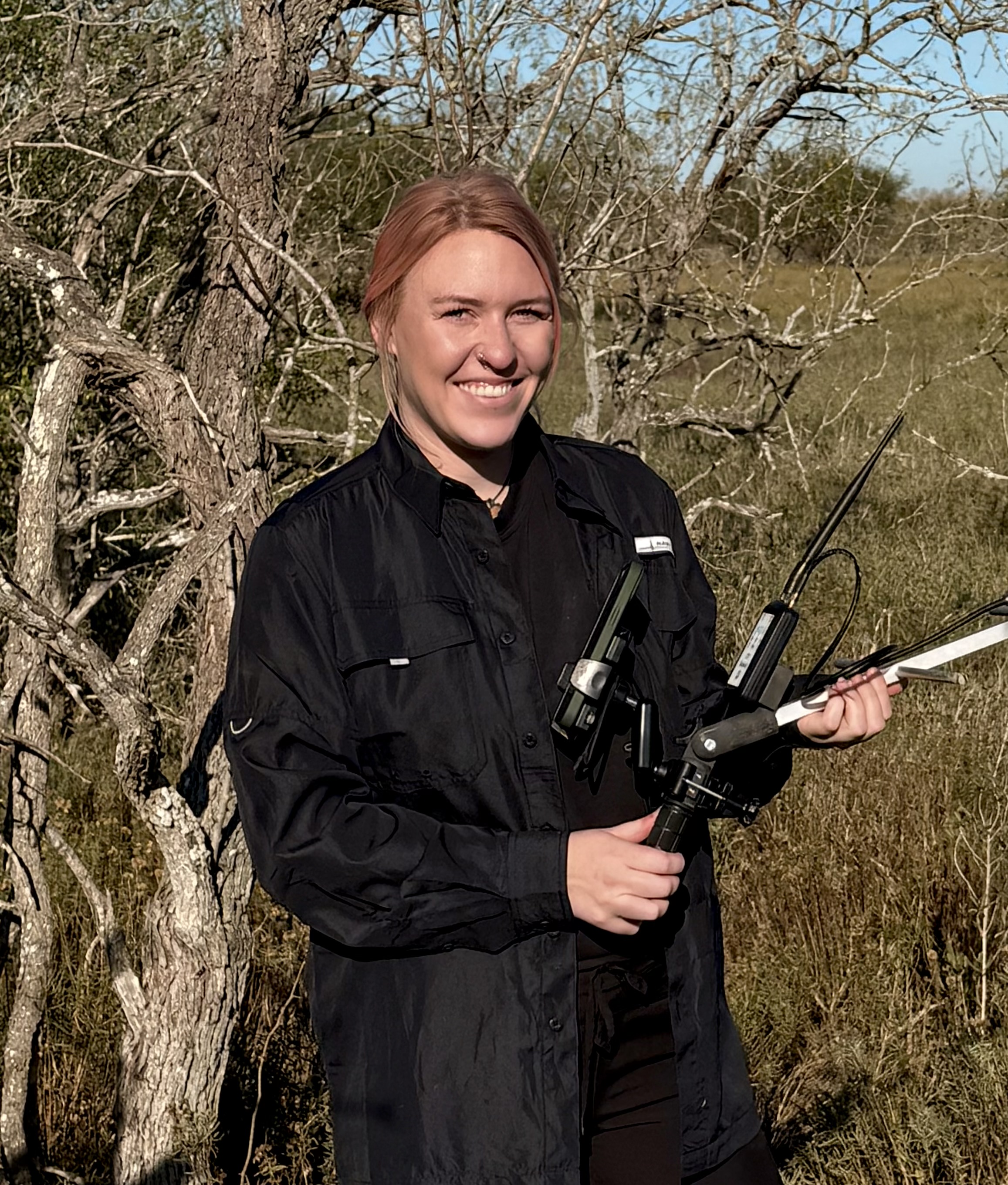
Leah Spoolstra is a PhD student at Texas A&M-Corpus Christi where she studies phenology and rewilding success of Texas tortoises. Before graduating with a degree in Biology from University of Hawai’i Manoa, Leah worked as a research assistant at a national wildlife refuge for three species of sea turtles in Costa Rica, often collaborating with visiting scientists and universities. During her program, she collaborated with a variety of organizations to identify invasive marine invertebrates within 6 main harbors on Oahu. While assisting with dam mitigation on salmon by stocking wild populations in Washington, she decided to continue her previous research by attending Texas A&M for her Master’s in Ecology and Conservation Biology. This project utilized RFID technology to relocate sea turtle nests and test the predator satiation hypothesis for synchronized nesting behavior.
Texas A&M University – Corpus Christi
Major Advisor: Shawn McCracken, Ph.D.
Seasonal Activity, Resource Utilization, and Spatial Use Patterns of the Texas Tortoise in San Patricio County
The Texas tortoise (Gopherus berlandieri)is a state protected species with densities declining throughout their limited range, constricted to South Texas, due to increased habitat fragmentation and displacement by development, agriculture, illegal capture as pets, and oil and gas exploration. Texas is a top producer and exporter of liquefied natural gas (LNG) in the United States. Development of LNG export terminals, wind turbines, and processing facilities are increasing through the core distribution of Texas tortoises. Translocation of Texas tortoises to the outermost portion of their home range has been proposed to mitigate the effects of oil and gas exploration. In addition, the release of reptiles originating from pet trade imposes socioeconomic and ecological costs. The extent of illegal Texas tortoise pet trade is not currently well understood and therefore remains underregulated. Confiscated tortoises cannot typically be released back into their native habitats (rewilded) as source populations are unknown, leading to a high risk for disease transmission that is amplified by homing behaviors. This study aims to establish long-term monitoring of seasonal activity, resource utilization, and spatial use patterns of Texas tortoises in San Patricio county, which is an understudied portion of their distribution. Additionally, I will monitor behavioral adaptation, survival, resource selection, and course movement of previously captive tortoises. This study aims to evaluate habitat use and success of rewilding captive Texas tortoises through a combination of disease screening and phased relocation to guide translocation and release efforts.
 welderwildlife.org