Joseph is a Ph.D. student in the Caesar Kleberg Wildlife Research Institute at Texas A&M University – Kingsville. Joseph grew up birding, hunting, and fishing with family in Iowa, which sparked his passion for science and conservation. In pursuit of this passion, Joseph earned his B.S. in Animal Ecology (Wildlife Option) at Iowa State University in 2022. During his time there, he worked as a research technician for the Prairie STRIPS project at ISU studying the importance of native vegetation features as habitat for grassland birds, reptiles, and small mammals, and eventually co-authored a paper on springtime bird use of these features. He also worked as a land stewardship intern for Iowa Natural Heritage Foundation, and spent two field seasons surveying birds, insects, reptiles, amphibians, and small mammals for ISU and the Iowa Department of Natural Resources through the Iowa Multi-Species Inventory and Monitoring Program. He also played trombone in the Cyclone Marching Band. Joseph recently completed his M.S. in Range and Wildlife Management at CKWRI on the thermal ecology of northern pintails during spring migration, while beginning his Ph.D. project investigating the movement ecology of colony island waterbirds in the bay systems of Texas. Outside of work, Joseph enjoys birding, hunting, fishing, and spending time with his wife and their cat, Puma.

Texas A&M University – Kingsville
Co-Advisor: Bart M. Ballard, Ph.D.
Co-Adivsor: Jordan C. Giese, Ph.D.
MOVEMENT ECOLOGY OF COLONIAL WATERBIRDS ALONG THE TEXAS COAST
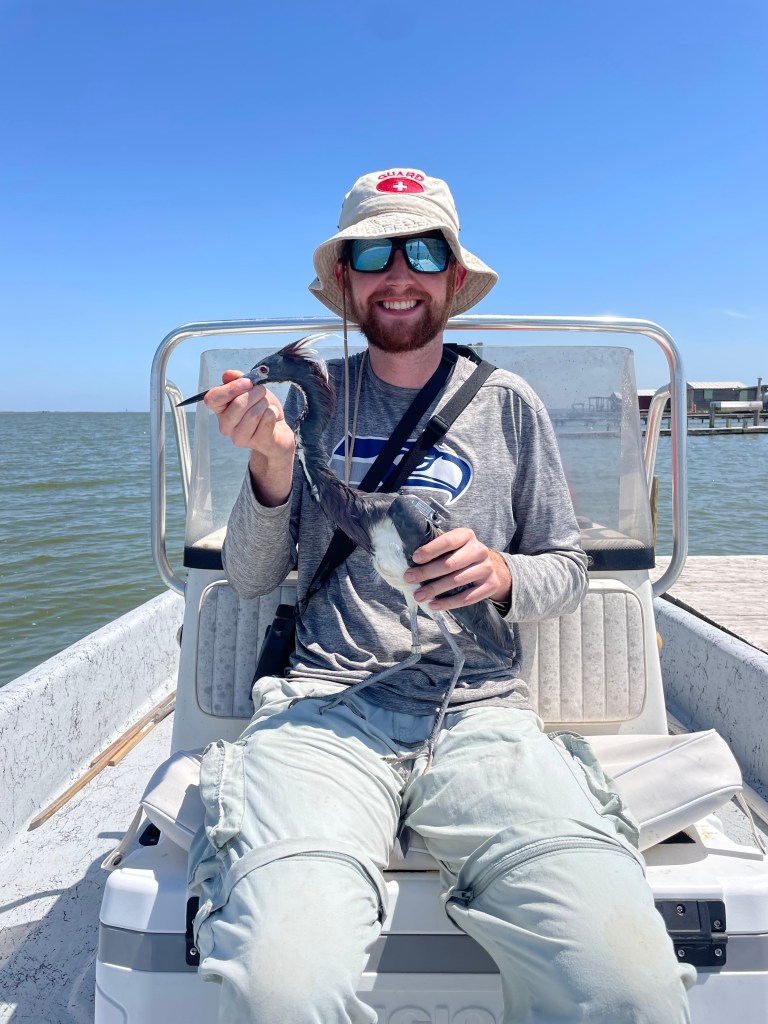
The coastal bays of Texas provide nesting islands for large gatherings of waterbirds, a group that has declined by 22% since 1970. However, these islands are increasingly threatened by erosion due to storm surge and sea level rise, and disturbance by recreational boaters. High costs of island restoration creates a need to develop a prioritization tool that helps managers identify a network of colony islands where rehabilitation and management are cost-effective and the potential for enhancing waterbird populations is high. A major factor considered an important predictor of colony size and productivity is the amount of foraging habitat adjacent to colonies. To answer questions regarding foraging habitat, I will be tagging three colonial waterbird species with GPS devices: great egret (Ardea alba), reddish egret (Egretta rufescens), and tricolored heron (Egretta tricolor). I will be investigating waterbird movements and habitat selection during the breeding season as well as the factors that influence energy expenditure across the nesting cycle. This project will help to identify high-priority colony islands and improve the ability of resource managers to effectively sustain breeding populations of waterbirds.
 welderwildlife.org