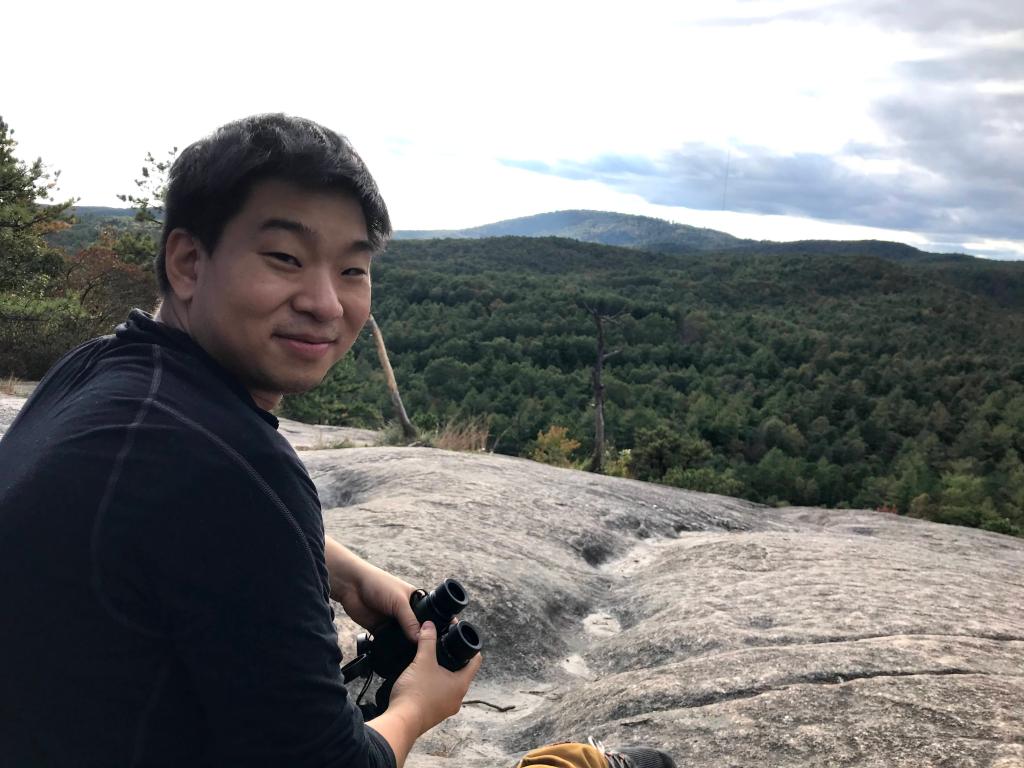
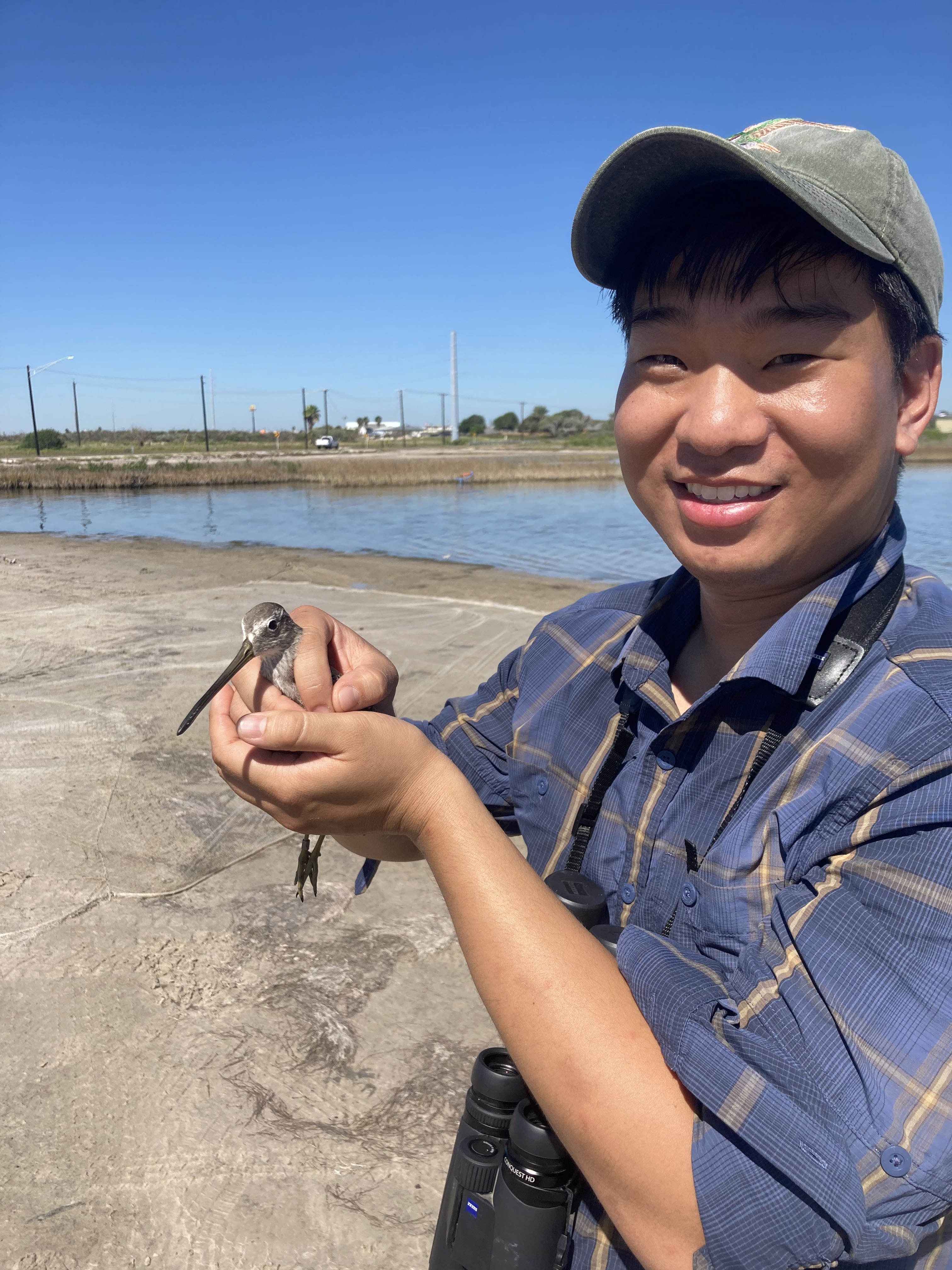
Jon Choi is a PhD Candidate at Duke University, where he studies the impact of offshore wind development on shorebird populations, particularly in the Gulf. After graduating with honors from Princeton University’s Ecology & Evolutionary Biology program in 2015, he worked as a High Meadows Fellow with the chemicals policy & human health team at Environmental Defense Fund. During his time there, he solidified his interest in law and applied research. In 2017, he joined the Duke University PhD program in Marine Science & Conservation with the Marine Geospatial Ecology Lab under the direction of Dr. Patrick Halpin. In 2018, he took a three-year leave of absence to pursue a JD at Duke University School of Law, graduating summa cum laude and passing the North Carolina bar exam in 2021. He has since returned to scientific research, where he combines policy, law, and geospatial analysis to help conserve shorebirds. His most recent work focuses on coordinating policy-relevant scientific information to inform wind development in the Gulf. He is an avid birdwatcher, cyclist, and Star Wars fan.
Duke University
Major Advisor: Patrick N. Halpin, Ph.D.
Migratory Shorebirds & Offshore Wind Energy Development
U.S. federal agencies are accelerating offshore wind energy development in the Gulf of Mexico. Concurrently, researchers are rapidly deploying satellite tracking technology to understand shorebird migration in the face of global population declines. My dissertation aims to use shorebird tracking data to understand how new offshore wind leases in the Gulf of Mexico may affect shorebird conservation. Working with researchers at the Smithsonian Shorebird Collective, I will attempt to identify critical stopover sites along the Gulf Coast and create a network model which shows how stopover sites are connected by animal movement. I will also look more broadly at the shorebird tracking data to understand how these migratory species connect Gulf Coast lease areas to the rest of the world, demonstrating how their conservation requires a global outlook. Finally, I will use my legal background to understand how the legal landscapes of conservation differ for year-round resident species, short-distance migrant species, and hemisphere-trotting long-distance migrants. Thus, my dissertation aims to not only improve our understanding of shorebird ecology, but to also directly use this information to inform offshore wind energy siting and future legislative and regulatory efforts.
 welderwildlife.org