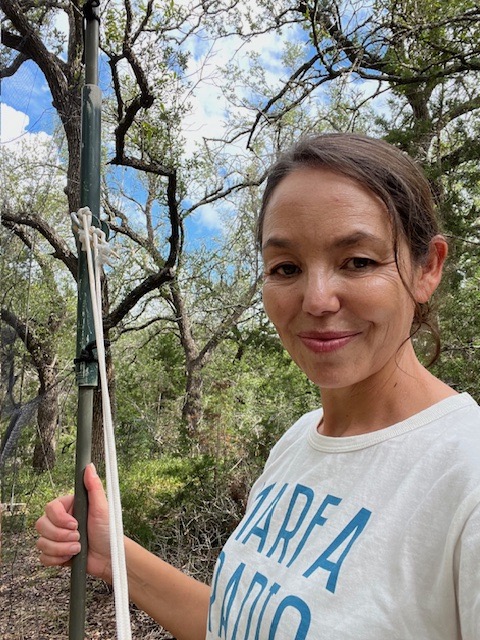
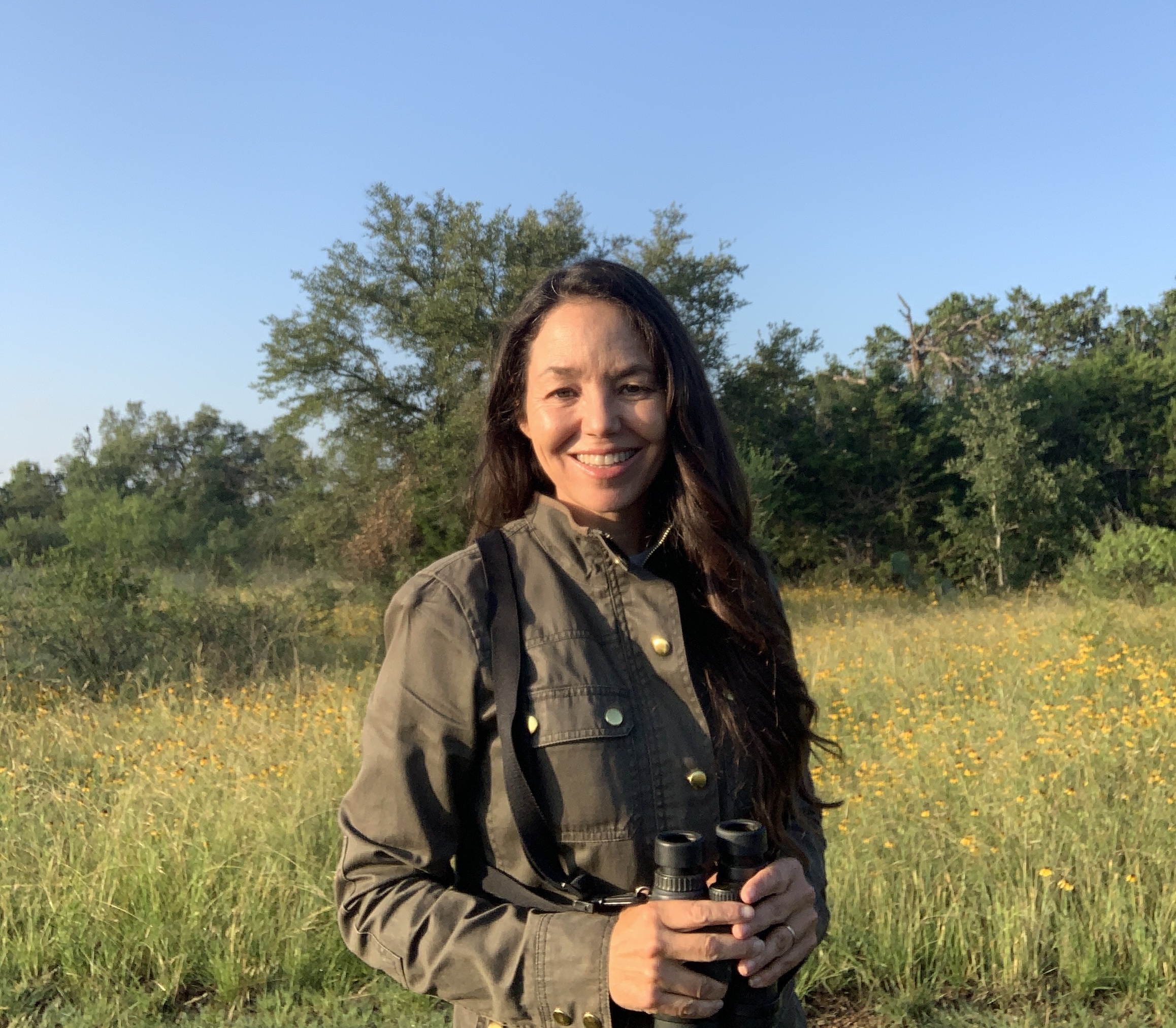
Dawn is a Ph.D. candidate in the Aquatic Resources and Integrative Biology doctoral program at Texas State University. Her research focuses on assessing stopover habitat quality for migratory songbirds in Central Texas. Dawn received a Bachelor of Science in
Molecular Biology from Florida Institute of Technology. However, her fascination with the intricacies of wildlife ecosystems led her to fieldwork focusing on avian research across the country and internationally. She completed a Master of Science in Wildlife Ecology at
Texas State University, researching Black-capped Vireo foraging behavior for her thesis. She co-founded an environmental consultancy assisting landowners to establish and maintain conservation easements supporting Black-capped Vireo and Golden-cheeked
Warbler conservation. In light of recent migratory bird population declines, she returned to Texas State University to study the migratory ecology of songbirds. Her research aims to identify key stopover habitat characteristics and environmental factors in this region to aid in avian conservation across Texas and beyond state borders. Dawn plans to continue applied ecological research and contribute to efforts focused on restoring avian populations amidst climate change and other anthropogenic pressures for these species.
Texas State University
Major Advisor: Joseph A. Veech, Ph.D.
Analysis of Stopover Habitat for Migrating Songbirds in Central Texas
Migration is the period of greatest mortality throughout migratory songbirds’ annual cycle and has profound effects on breeding success and survivorship. High-quality
stopover sites, with abundant food resources, allow for rapid refueling of fat stores enabling a songbird to continue the next portion of its journey. Identifying where highquality stopover sites are located along migratory pathways, and how habitat characteristics affect the physiological condition of migratory birds has implications for the conservation of these species. Central Texas lies squarely in the Central Flyway, yet no research has investigated stopover habitat in this region. Our study aims to assess relative stopover habitat quality of riparian and upland habitats in Central Texas by comparing refueling performance, physiological condition, and chronic stress of
migratory songbirds using plasma metabolite profiling and other laboratory techniques. Utilizing remote sensing methods, we will also compare habitat characteristics between habitat types with regard to migratory songbird abundance. Additionally, we will develop predictive models to assess whether NDVI values, a proxy for vegetation productivity, are strong indicators of high-quality habitat. Finally, we will evaluate arthropod abundance to identify which habitat type may be more useful as a food resource for migrating songbirds. Our preliminary results show refueling performance was dependent on year and for some groups on an interaction of year and habitat. Variation of fat deposition may be due to the fluctuation of environmental factors affecting food resources. This research will strengthen our knowledge of stopover habitat use and contribute to the overarching goal of facilitating avian conservation.
 welderwildlife.org